May 29, 2011

Institut du Monde Arab - West meets the Middle East

Zaha Hadid's mobile art pavilion, commissioned and donated by Chanel, now forms
a permanent part of the exhibition space at IMA to showcase works by Arabic artists
Located along the left bank of River Seine, the Institut du Monde Arabe is an architectural gem as much as a symbol that epitomises the Islamic culture and the engagement of the Middle East in the West.
  
The building is designed by the legendary French architect Jean Nouvel, winner of the 2008 Pritzker Prize, architecture's highest honour. It is also this project of 1987 that brought Nouvel international fame. The signature of IMA is the glass facade comprising metallic screens that unfold with moving geometic mofits around the day controlling the amount of sunlight entering the building -  similar to a camera shutter. In fact, this seemingly revolutionary idea can be linked to traditional Arabic architectural features for climate control. 'Mashrabiyah', for example, is an ornamental window screen that provides shade and protection from the hot summer sun.  As such, IMA is an exemplary result of a marriage between foreign ideas and functionality that inspire contemporary designs.


As seen from the inside, mechanical lenses reminscent of Arabic latticework in its south wall open and shut automatically, controlling interior lighting as the lenses' photoelectric cells respond to exterior light levels.

One of the best kept secrets about the IMA is the panaromic view of Paris on its top floor. If you are not fond of crowds, this is the place to be.

A view of Cathedrale Notre Dame de Paris and Pont Marie from the IMA

May 27, 2011

Best steak frites in Paris?

How do you want it? What drink? What dessert? That's all the decisions you will need to make when you eat at Le relais de l'entrecote. This famous steakhouse in the 8th arrondissement serves only one thing - steak and fries, and for one price - 24.50 euros. That's pretty good value when you get a crisp, green salad and two helpings of the tender strips of grilled steak and chips, plus an abundance of the secret house sauce that makes this dish such a crowd-pleaser.

For over twenty years, their fixed formula and no-reservation policy seems to have served Le relais de l'entrecote well. A long line is formed, noon and evening, outside the door. What makes better advertising than real people queuing 365 days to get in? Their success has been phenomenal and they are now also in Geneva.

Coming back to the steak, it is brought sliced and drenched with a herb-butter sauce, along with the very good fries. The remaining portion is set to rest above votive candles on a nearby station, and then served as soon as your first helping is cleared. The service runs like clockwork - efficient but mechanical. I would happily pop back there if I am craving for a good piece of steak and nothing else. Otherwise, I would prefer something less predictable and formulaic.

May 17, 2011

The Grand Cru of Gastronomy in Burgundy (Part 3)

PULIGNEY-MONTRACHET

Spending a day out in the vineyards along the Grand Cru route is obligatory for anyone who visits Burgundy. Even for those mildly interested in wine, a short trip down south to Puligney Montrachet in Cote de Beaune would not disappoint. I had lunch at Le Montrachet which was truly a highlight of my trip.

Puligney Montrachet is home to four Grand Cru vinegards, namely Montrachet, Batard Montrachet, Bienvenue-Batard-Montrachet and Chevalier Montrachet. In addition, there are 17 Premier Cru vineyards in this area. Over 99 percent of wine produced in Puligney Montrachet is white, using primarily Chardonnay as the main grape variety and less so, Pinot Blanc. Its style is distinctly mineral.

Converted from a period property dating from the early 19th century, Le Montrachet is a beautiful hotel cum restaurant located in the heart of the village of Puligney Montrachet.  The dining area extends to the terrace that offers an expansive view of the estate set in an idyllic surrounding. What better place to savour a gourmet meal over a glass of crisp white wine!

Amuse bouche
The refreshing amuse bouche was a mixture of salmon and creme with the consistency of a veloute, light and airy. The lunch menu looked promising with a nice selection of seasonal produce, including white asparagus, foie gras, duck breast and sea bream.

When it comes to ingredient, I think nothing beats quality and freshness. The warm white asparagus tasted like they have just been picked from the field this morning and with the Sauce Mousselline, they were simply divine. The homemade foie gras terrine paired up with roasted pears was another winner. The cooked fruit not only cut through the richness of the liver, the sweetness also complemented the foie gras in the same way as a glass of Sauterne.

Warm white asparagus with Sauce Mousselline


Homemade foie gras terrine with roasted pears
Following our palate cleanser, the main courses of sea bream and duck fillet were both excellent in that the flavours were clean, uncomplicated.  The chef allowed the natural flavour of the ingredients to come through.  In this case, less is more.  There was nothing extraneous on the plate both in terms of taste and decoration.  This is culinary art.

Grilled sea bream with roasted aubergine and cherry tomatoes
Roasted duck fillet with garden vegetables
The excitement I had over the starters and main courses escalated to a new height when the dessert finally arrived. It was a soft chocolate tart served with lime sorbet and a sable with semi-cooked rhubarb and vanilla ice cream. Again, faultless. What am I to say about Le Montrachet except that this place is truly a gem - a perfectly rural restaurant with the perfectly balanced menu and execution.  

Soft chocolate tart with lime sorbet

Sable with rhubarb and vanilla ice cream
Petit fours


The Grand Cru of Gastronomy in Burgundy (Part 2)

Hospice de Beaune was built in the 15th century
 to provide care for the sick and dying.
BEAUNE

While Dijon is the capital of Burgundy, its much smaller neighbour Beaune is the wine capital of Burgundy. Beaune is surrounded by some of the world's most famous wine-producing villages.

For this reason, Beaune is often the preferred destination in Burgundy where one can easily explore the beautiful vineyards in the Cote de Beaune region. It also has the added advantage of a veloroute that stretches 22 kilometres from Beaune to Santenay, passing through Pommard, Volnay, Meursault and Puligny-Montrachet.

A view of Pommard from the veloroute
The sheer number of restaurants in Beaune is astonishing and the overall standard is extremely high. Out of the few I have had the good fortune to visit, Le Ciboulette turns out to be my favourite. Ma cuisine and Caveau des Arches are both exceptional in different ways but when it comes down to the experience on that particular evening, my dinner at Le Ciboulette was just a bit more enjoyable - thanks to the warm reception of the staff.

Tartine with pork rillette and olives
It is quite often possible to tell from the moment the bread arrives at your table what kind of food you will likely be served and how good they will be. I have not been too far off with my predictions, so it is reassuring that the pork rillette tartine looked and tasted as it should - rustic and well seasoned.

Terrine of ox-tongue
Terrines are so popular in France that you can pick them up pre-packed in supermarkets for a couple of euros. In restaurants, it is kind of tricky to serve such dishes with a flair.

The two terrines at Le Ciboulette were the best I have had to date. The ox-tongue and ham were beautifully sandwiched between the vegetables and herbs, but most importantly, the gelee made from a consomme celeste made all the difference.  It adds so much depth to the flavour of the cold meat. It was out of this earth!

Jambon de persille
The main courses of fillet of Charolais beef and roasted lapin were both interesting choices as they are less likely to be served or appreciated outside of France. A fellow student from Australia was almost reduced to tears in having to chop up a bunny (with the head on) to make a rabbit stew. Well, it is not for the faint heart, I must add.

Roasted lapin with garden vegetables
In France, beef from Charolais is considered to be the best but I find it does not compare with those from the UK or the US, both in terms of flavour and texture. That said, I was very happy with both dishes which were delicious and executed with competence.

Grilled charolais fillet of beef with garden vegetables
Considering all the meat I have consumed that evening, it is surprising that I was still enthused over my dessert options. I was obviously in a great mood. Indeed, the assortment of mini house desserts was exactly what I wanted. A spoonful each of the different classics - creme brulee, frozen nougatine, chocolate mousse and poached pineapple. The millefeuille of strawberries, light and fruity, was a great way to end a sumptuous meal.

Assorted mini house desserts

Millefeuille of strawberries


The Grand Cru of Gastronomy in Burgundy (Part 1)

Burgundians are passionate about their wine and food. After indulging myself for four consecutive days on eight big meals in the Bourgogne, I think my new and expanded waistline may add some weight to what I have to say about the standard of cuisine in this region. Only two words for it. Tres Magnifique!

All the meals I had ranged from good to excellent - the choice of seasonal and prime ingredients - beef from Charolais and chicken from Bresse, big flavours and exquisite presentation far exceeded my expectation.

The famous Boeuf Bourguinon, Escargots a la Bourgogne, Coq au vin and Jambon Persille can be found almost in every restaurant serving classic Burgundian fare.  These hearty traditional dishes are invariably made with the addition of Burgundy red wine or Chablis white wine from this region, but have been updated and refined to suit modern taste.  It is hardly surprising that the proud Burgundians have as many Michelin starred restaurants under their belt as their Grand Crus. My favourite restaurants on this trip are Stephane Deborde in Dijon, Le Ciboulette in Beaune and Le Montrachet in Montrachet.  


Cathedrale a Notre Dame de Dijon
DIJON

Dijon is perhaps best known for its mustard. Funny enough, most of the mustard seeds used for the production of Moutarde de Dijon nowadays are coming from Canada. 

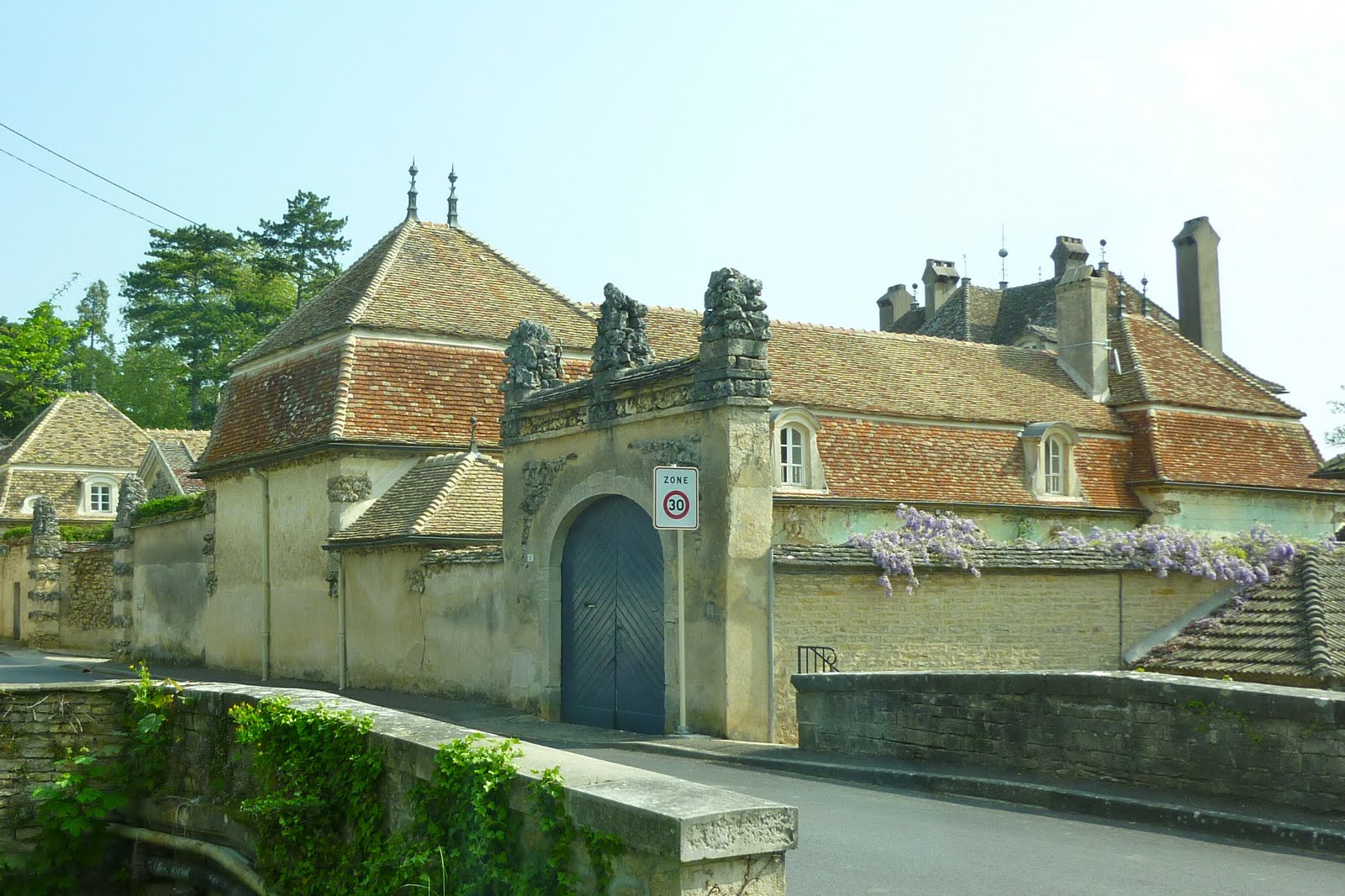
For some time I have been under the impression that being the capital of Burgundy, Dijon must be a big city with little character.  And I could not have been more wrong - the place is full of interesting sites in the old town centre - primarily churches and historical buildings that feature a wide spectrum of architectural styles from the Gothic, Renaissance to Neoclassicism.  

Colourful tiled roof in geometric patterns are typically
 seen in Burgundian architecture
A good part of the city centre is designated pedestrian walkway and to discourage people from driving, a free shuttle bus runs pass all the major sights from the railway station, which makes getting around Dijon a breeze.

Stephane Deborde was recommended by my tour guide as THE place to eat in Dijon and I still have her to thank for the wonderful discovery. The restaurant is situated slightly off the beaten track but the location would not pose the slightest problem once you have eaten there. Nothing will deter you from returning.

Amuse bouche
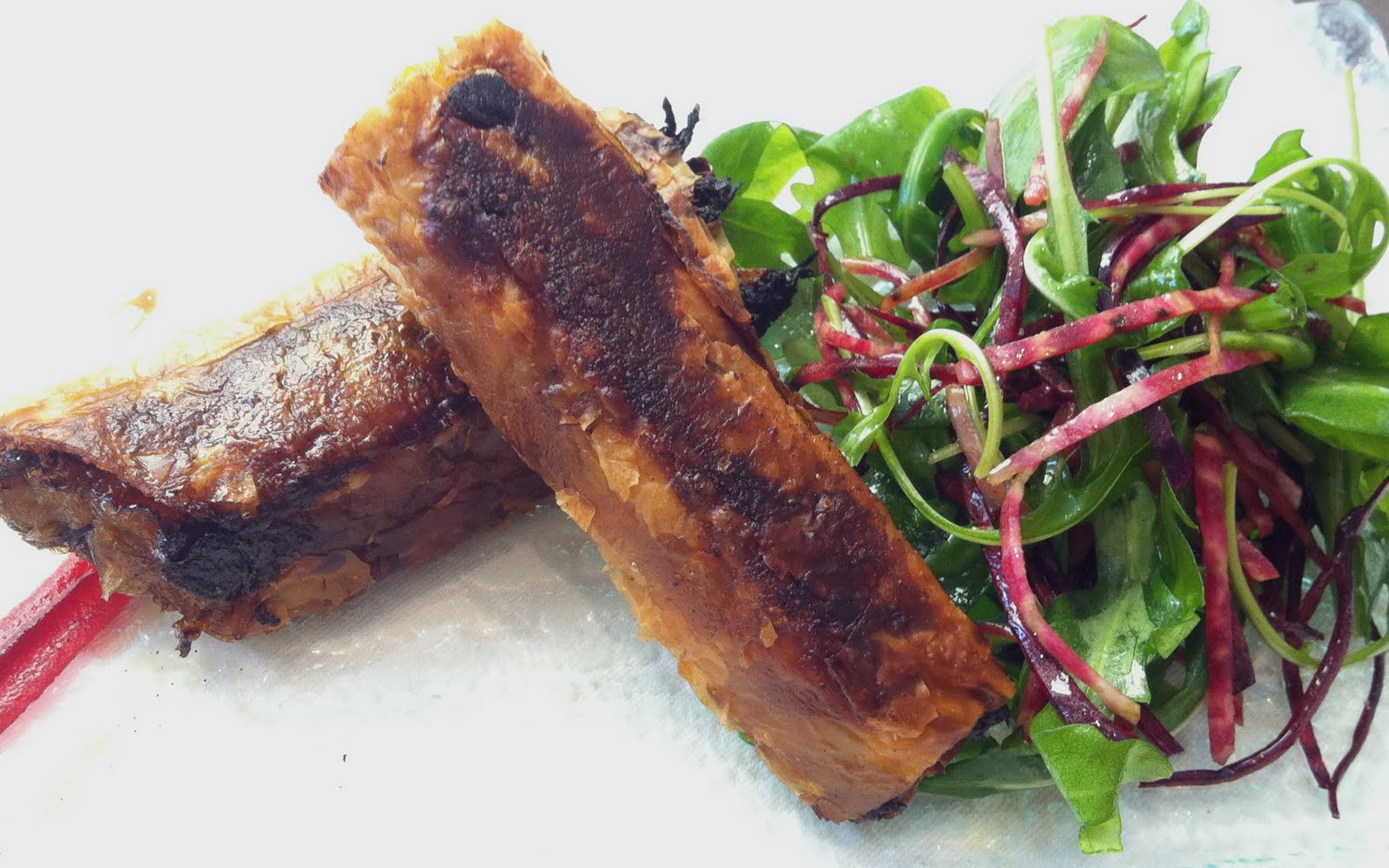
The dining room is classy without being too formal. Each course on the lunch menu was exquisitely prepared.  From the moment the amuse bouche duo arrived at my table, I knew I was in for an amazing culinary experience. The delightful asparagus veloute and smoked salmon mousse were followed by a crispy pastilla of pigeon confit served with a bed of salad leaves. Both were delicious and refreshing.

Pastilla of pigeon confit with salad leaves
The succulent fillet of veal was roasted to the exact cooking point between medium and medium rare appropriate for this cut, and garnished with potato dauphinoise, cream of celeriac and of course, a veal-based sauce. This classic dish was spot-on and really did it for me.

Fillet of veal with pomme dauphinoise and cream of celeriac
As an establishment for fine-dining, I think it is in the dessert department where Stephane Deborde really flexes its muscles.  The elaborate dessert, another duo, consisted of a multi-layered joconde biscuit and jellied raspberry puree, topped with raspberry glaces.  And next to it was a champagne sorbet perfumed with rose petals.  Every element on the plate was perfectly in tune with one another - not overpowering, just pleasing to the eyes and the palate.

Raspberry cake with champagne sorbet
To finish, the petit fours comprising bite-size concoctions of mangoes and strawberries were simply too tempting to skip, although I was most definitely in the overload mode. 

Believe me, they taste as good as they look.

Strawberry macaron and mango mousse

April 30, 2011

The story of a Burgundian winegrower

First I must confess I am not a wine connoisseur.  What I do know, however, is that in the world of fine wine, the only region in France that can truly rival the supremacy of Bordeaux is Burgundy. These two regions, however, are so different in nature that any comparison could only be a gross generalisation. This is what I will try to avoid here.

Savigny des Beaune
My observation is based on a recent visit to a very small producer in the village of Savigny des Beaune, a few kilometres from Beaune. The Ecards, like most growers in the region, is a family-run operation, and by that I mean a husband and wife team, plus hired help during the harvest. Their 4.3-hectare plot produces only 20,000 bottles of premier cru wine in a year.  Most plots have a minimum size of 7.5 hectares.  It is also quite common for larger producers to own appellations in different parts of Cote de Beaune and Cote de Nuits.

Family home cum wine tasting cellar
The Ecards started out on their own in 2005 and rented the land owned by the family. The start up was not easy by any measure because Michel inherited nothing other than the skills and experiences that he had acquired from working with his parents and grandparents. His wife, Joanna, had to put her own career on hold in order to help establish the operation.

The wine tasting cellar
We spent over an hour tasting the wines at their home cellar and more interestingly, learned about their thinking, their vision and their passion for what they are doing and for the region.

It was Easter Monday, a time for family gatherings. But the Ecards took time to show us their production facility and vineyard with great enthusiasm.  There was absolutely no pressure to buy anything, and even if we wanted to make a purchase, it would not have been possible because it was Easter. How inflexible, how French!

The wine cellar at the production facility
The Burgundians, as they call themselves, are proud people, warm and hospitable. My heart went out to Michel when I saw in his eyes glimpses of hope that his twelve years old son would grow up overnight and be a part of his wine business which is just beginning to generate enough income to cover his mortgage.  Michel is basically a farmer, it just happens that he grows vine. In his words, "I take care of the vines in the way I know best and let nature run its course." I admire his respect for nature and for not meddling with it. He is in the least interested in the marketing side of the business which is being handled by an agent.

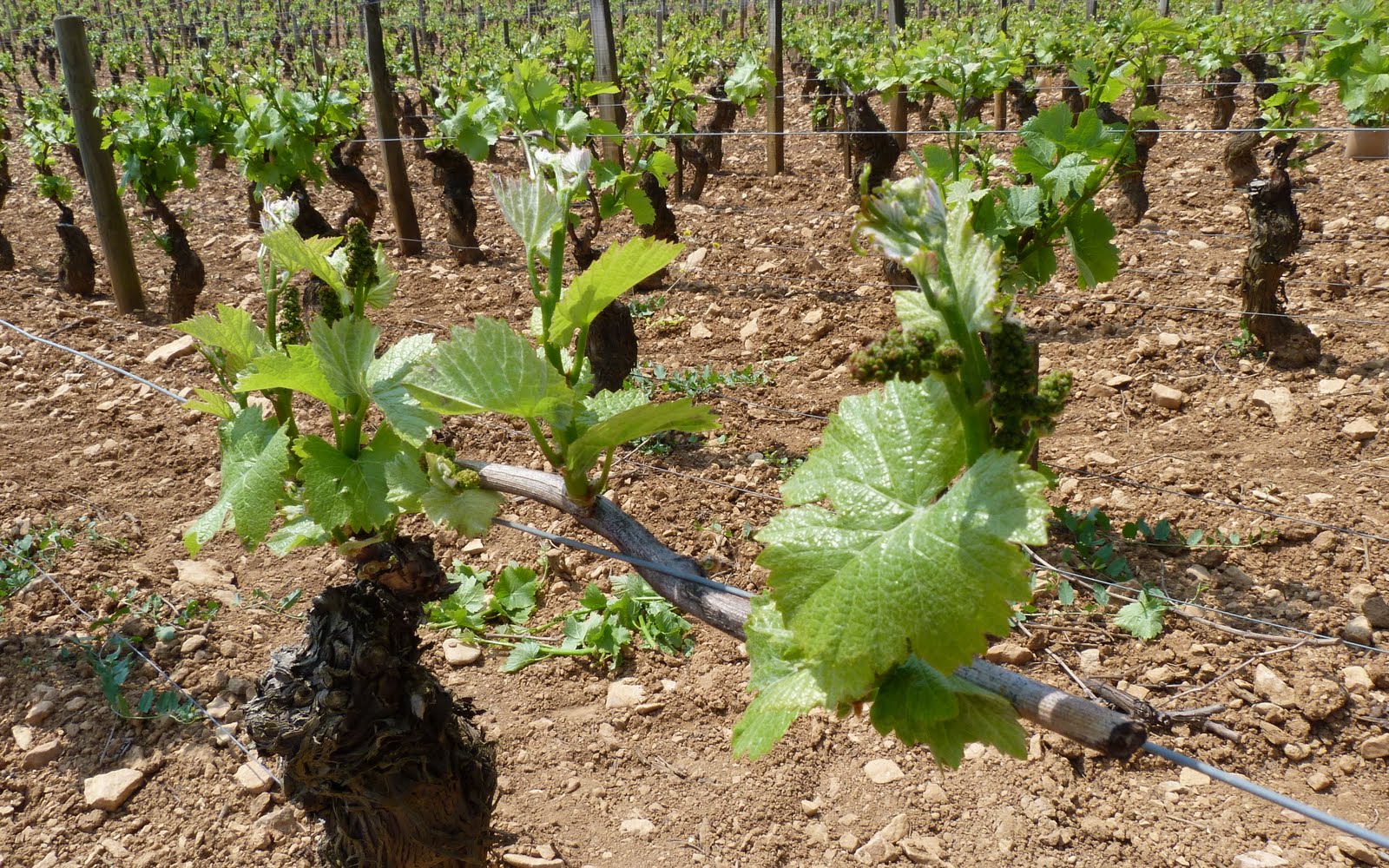
Ecard's vineyard in full view
It goes without saying that the Ecards represents only a small percentage of wine producers in the region. And there are the famous Grand Cru estates, such as Romanee Conti, that have become very commercialised at the other end of the spectrum of wine consumption - targeted almost exclusively at the rich and famous, whose doors remain firmly shut.

A bottle of wine is typically made with grapes from two vines
April is the time for pruning while September is for harvesting 

Dishes inspired by the southwest

Tucked away in the 14th arrondissement, Le Regalade's indisputably good menu at 32 euros is a hit with the locals.  On the night of my visit, the place was packed by 8 pm on a mid-week - a most encouraging sign.

Pate de campagne
Before we had the chance to place our order, the homemade pate de campagne, bread and pickles arrived at our table and it was just the kind of appetizer that you have come to expect in a traditional bistro - the little extra that makes your dinner experience more fun and memorable.

Although the menu is not extensive, the choices cover a good range of meat, fish and poultry, plus an impressive wine selection. If you fancy some foie gras or pigeon, there is a supplement of 15 euro and there are quite a few of these add-ons.

As a starter, the foie gra royale with asparagus veloute was very well executed.  The royale was smooth and adds an interesting taste and texture to the otherwise run-of-the-mill veloute.

Foie gras royale with asparagus veloute
Saint Jacques with vinigrette, parmesan shavings and croutons
The Saint Jacques that I ordered was excellent. Served in their shells, they were only partially cooked. The addition of parmesan cheese and croutons gave this common ingredient a modern twist. Between the two main courses, the poached fish was much less successful than the grilled duck breast which was done to perfection.

Poached fish with vegetables
Magret de canard with potatoes and green salad
Souffle with grand marnier
I finished off with the grand marnier souffle which looked amazing but was a little less light and airy than I had expected. For its high quality ingredients and excellent value for money, Le Regalade is the perfect place for a convivial meal with friends.


April 17, 2011

Paulo Ribeiro and Ballet de Lorraine

White Feelings and Organic Beat, performed by Ballet de Lorraine are two very different approaches to art while bearing the same signature choreography of Paulo Ribeiro. At times, the dancers appear as an entity, they move together perfectly synchronous and at other times, they engage in their own individual body language.

White Feelings
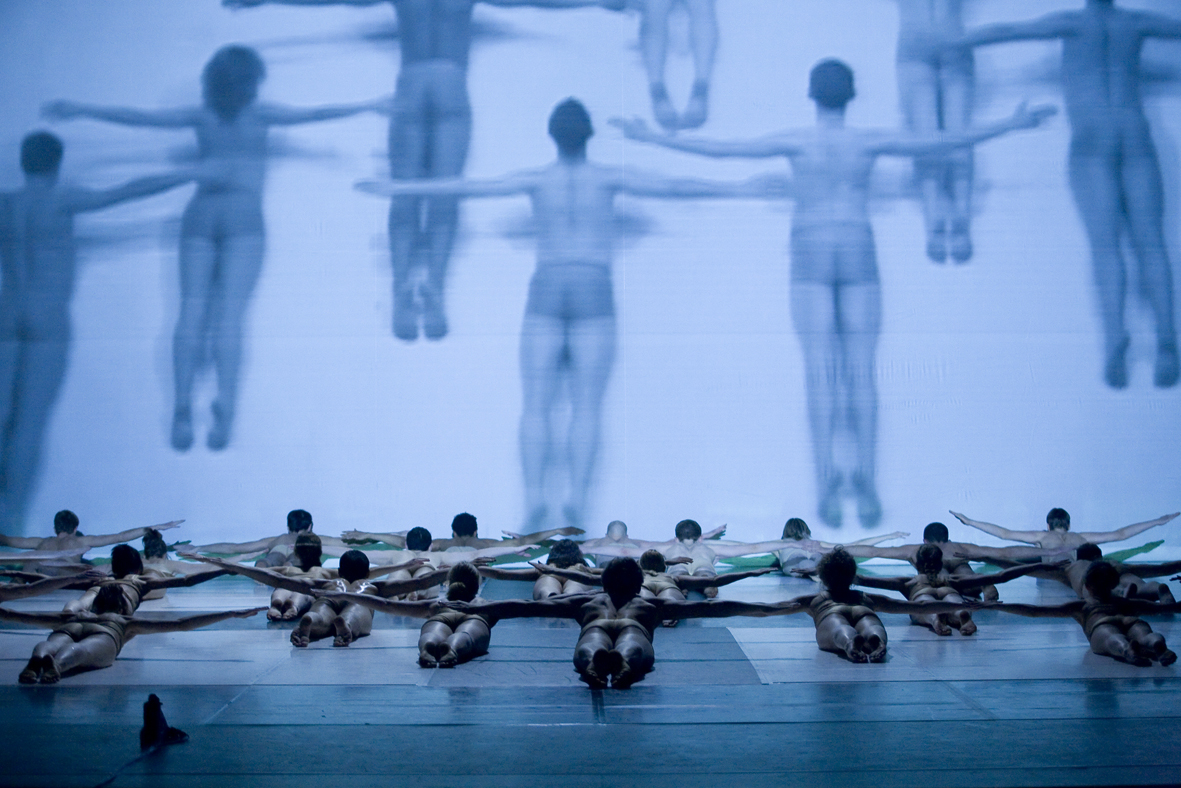
One of the most exciting aspects of the performance is the music.  White Feelings is accompanied by four accordion players whose repertoire ranges from melancholy elegies to the frenzied rhythm of tango.  It reminds me of the musical style of Argentinian composer, Astor Piazzolla - fluid and passionate. Set against the avant-garde music of John Cage written in 1942 and performed live in the theatre, Organic Beat is a massive production played out by an overwhelming number of dancers - a total of 31.

Organic Beat
The idea of filming the dancers and projecting the images simultaneously on the wall behind the stage is awesome. What I love about this show is that you don't have to think very hard about the narrative or the meaning behind Ribeiro's work. The beauty of the choreography, the music and the stage design is enough to blow you away.

April 14, 2011

Ai Weiwei's Sunflower Seeds at the Tate

The time has finally come for me to be back on my home turf after three months in Paris struggling with the French language and the French bureaucracy. As soon as I stepped off the Eurostar in London, I find myself being able to think and operate normally again.

Apart from rushing to my first and long overdue dim sum lunch at Royal China, checking out London's current exhibitions is also high on my priority list. I have been hoping to see a major Chinese contemporary artist being featured at the Tate Modern. Hence it gives me great pleasure to encounter Ai Weiwei's work in the Turbine Hall.

His installation is made up of what appears to be millions of sunflower seed husks, apparently identical but actually unique. Although they look realistic, each seed is made out of porcelain. And far from being industrially produced, they have been intricately hand-crafted by hundreds of artisans in the city of Jingdezhen, which is famed for its production of Chinese imperial porcelain since the 13th century.  I said to myself that this is where China's strength lies.  The massive burden of our population of 1.3 billion has now proved to our greatest asset.

Poured into the vast space of the Turbine Hall, the seeds form a seemingly infinite landscape. The work can be looked at from afar or it could be viewed at close range. Each piece of seed is a part of the whole - a poignant commentary on the relationship between the individual and the masses.  What does it mean to be an individual in today's society?


While his exhibition is taking place in London, news of Ai Weiwei being detained by the Chinese government appeared on 3 April.  It remains to be seen whether China will back down on this occasion and release Ai who has a huge following and support in the West.